
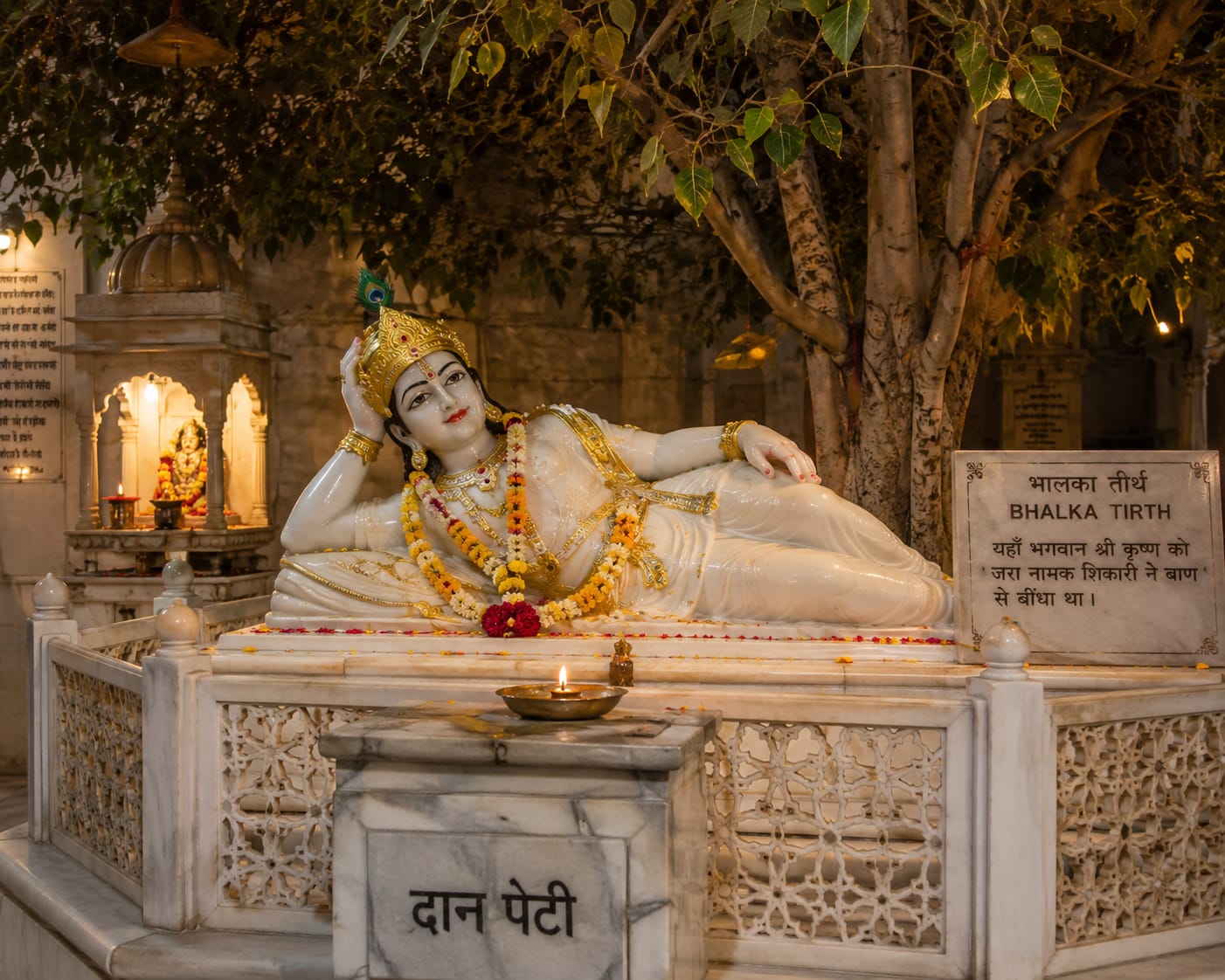
Bhalka Tirth: Bhalka Tirth is the sacred site where Lord Krishna departed. Experience the peace of this marble temple marking his final earthly journey.
Bhalka Tirth: Where Lord Krishna’s Earthly Journey Concluded
1 Safe Hope Cures Sad Death Fear
Bhalka Tirth: The Mythological Backdrop, Curse, and Catalyst :-1 Safe Hope Cures Sad Death Fear
To understand the profound significance of Bhalka Tirth, one must look back at the aftermath of the epic Kurukshetra War. Following the destruction of the Kaurava dynasty, Gandhari, the grieving mother who lost all one hundred of her sons, confronted Lord Krishna. Overwhelmed by sorrow and anger, she laid a curse upon him: that he and his entire Yadu dynasty would perish after thirty-six years through mutual destruction, and that Krishna himself would meet a lonely, inglorious end in the forest.
Lord Krishna, possessing divine omniscience, accepted her words with serene grace, recognizing that the internal destruction of the Yadavas was a necessary part of the cosmic order. Decades later, the prophecy unfolded during a fratricidal civil war at Prabhasa, where the Yadu clan annihilated itself. Following the departure of his elder brother, Balarama, who left his physical form through yogic meditation, Lord Krishna retired into the quiet forests of Prabhas Patan.
Seeking solitude, the Lord sat beneath the comforting canopy of a sacred Peepal tree in deep yogic samadhi. He rested his left foot over his right knee, exposing the reddish sole of his foot. In that quiet forest, a hunter named Jara—who, according to folklore, was the reincarnation of Vali from the Treta Yuga, fulfilling a divine debt from the Rama avatar—was stalking prey. Mistaking the glowing, visible sole of Krishna’s foot for the face of a deer crouching in the foliage, Jara released a swift arrow.
The arrow struck true, creating the monumental moment from which Bhalka Tirth derives its name (Bhalla meaning arrow). Upon rushing forward to claim his kill, Jara was struck with immediate terror and remorse upon discovering that he had wounded the Supreme Lord.
Divine Forgiveness and the Transition of Eras at Bhalka Tirth :-1 Safe Hope Cures Sad Death Fear
The interaction between Lord Krishna and the hunter Jara forms the philosophical heart of Bhalka Tirth’s legacy. Stricken with guilt, Jara fell to his knees, weeping and begging for forgiveness for the grave sin he had inadvertently committed.
In response, Lord Krishna’s countenance remained a picture of boundless compassion and divine benevolence. Rather than showing anger, the Lord comforted the distraught hunter, explaining that the event was entirely according to his own divine will and cosmic plan. He absolved Jara of any guilt and granted him passage to the spiritual realm.
This profound event, recorded in sacred texts as the Shri Krishna Nijdham Prasthan Leela, signifies far more than a physical passing; it represents a voluntary spiritual exit. According to scriptural chronology, the moment Lord Krishna withdrew his presence from the earthly plane marked the exact threshold between the end of Dvapara Yuga and the dawn of Kali Yuga, traditionally dated to February 3102 BCE. Following this incident, Krishna walked a short distance toward the coast to Dehotsarg Tirth, where he finally cast off his mortal coil.
1 Safe Hope Cures Sad Death Fear
Architectural and Spiritual Experience at Bhalka Tirth :-1 Safe Hope Cures Sad Death Fear
Today, Bhalka Tirth stands as a magnificent tribute to this eternal story, drawing thousands of devotees, historians, and spiritual seekers from across the globe. Managed by the Shree Somnath Trust, the modern temple complex seamlessly blends architectural elegance with deep spiritual reverence.
1 Safe Hope Cures Sad Death Fear
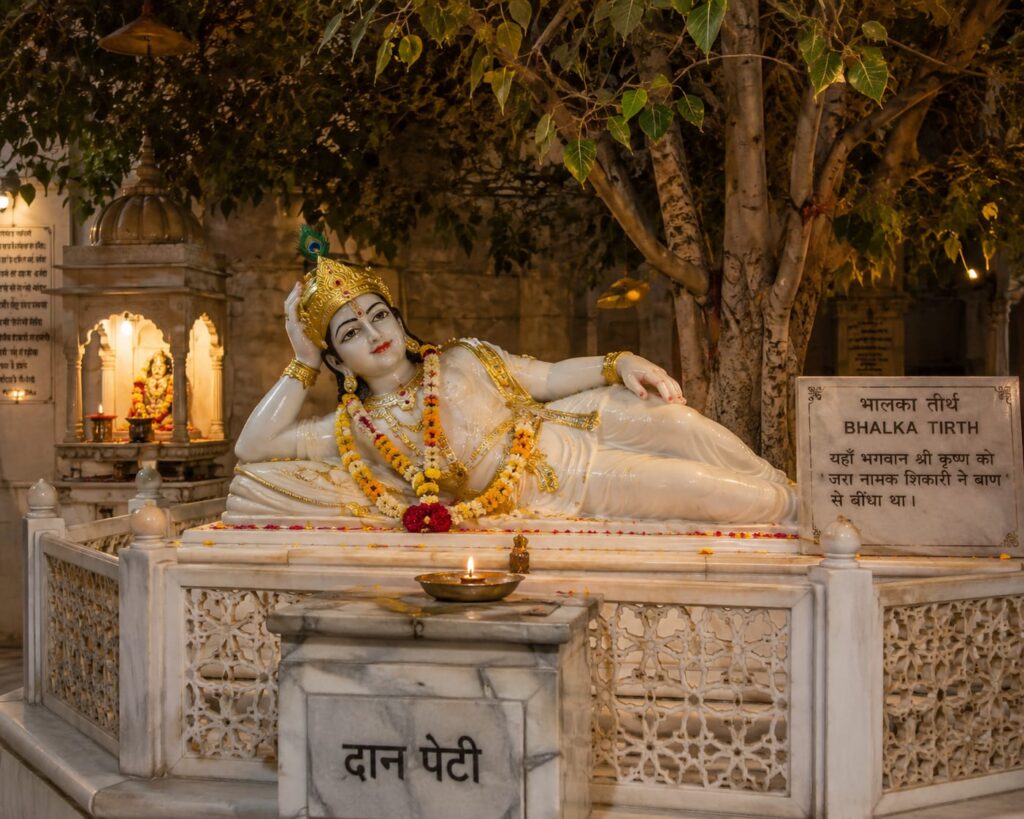
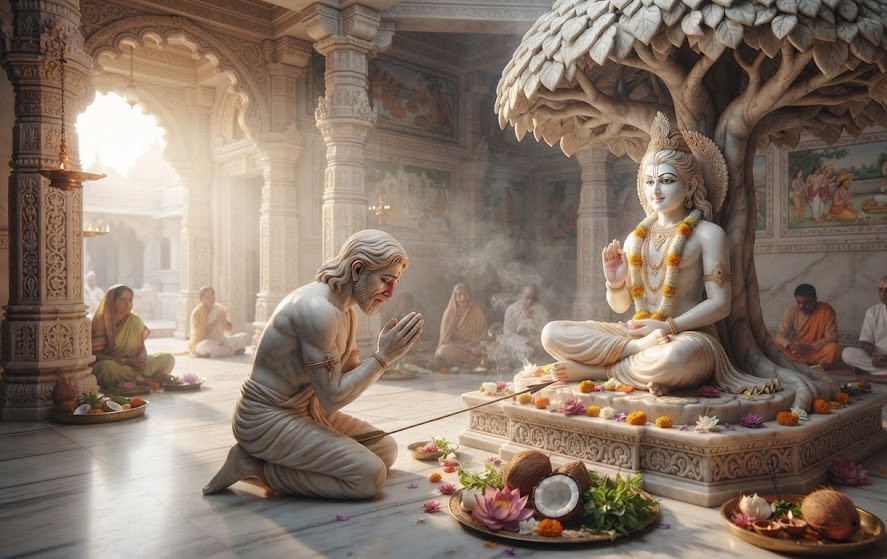
- The Sanctum Sanctorum: The inner shrine houses a beautifully crafted, serene marble idol of Lord Krishna reclining in a meditative posture beneath a tree. Directly opposite the Lord sits a marble statue of the hunter Jara, depicted kneeling with folded hands, his face reflecting a mix of repentance and awe, while Krishna’s expression radiates divine grace and forgiveness.
- The Sacred Peepal Tree: Within the courtyard and integrated into the spiritual ambiance stands an ancient, evergreen Peepal tree—revered as a living descendant or representation of the very tree under which Lord Krishna rested during his final moments. Pilgrims walk around this sacred tree in silent parikrama (circumambulation), offering prayers and soaking in the tranquil energy.
- Serene Surroundings: Unlike the bustling energy of neighboring commercial zones, the atmosphere within Bhalka Tirth is characterized by profound quietude. The gentle rustling of leaves, the scent of burning incense, and the collective devotion of pilgrims create an environment that invites deep introspection.
1 Safe Hope Cures Sad Death Fear
Pilgrimage Planning and Practical Information for Bhalka Tirth :-1 Safe Hope Cures Sad Death Fear
Bhalka Tirth serves as an essential stop on the broader Saurashtra pilgrimage circuit, which includes the majestic Somnath Jyotirlinga Temple, Triveni Sangam (the holy confluence of the Kapila, Hiran, and Saraswati rivers), and Dehotsarg Tirth. For more details on regional heritage sites, you can check out resources on Gujarat Tourism. You can also read more about related historical narratives in our guide on ancient sacred sites.
- Location: Situated on the Veraval-Patan road, roughly 4 kilometers from the main Somnath Temple in the Gir Somnath district of Gujarat.
- Accessibility: Veraval serves as the nearest railway junction (just 3 kilometers away), providing seamless rail connectivity to major cities in Gujarat. The closest domestic airports are Diu and Rajkot, while the temple is easily accessible via local auto-rickshaws, cabs, and state-run or private buses from Ahmedabad and other regional hubs.
- Best Time to Visit: While Bhalka Tirth welcomes devotees year-round from morning until evening, the cooler winter months between October and March offer the most pleasant weather for exploration. The site also experiences vibrant spiritual fervor during the festival of Janmashtami, when devotees gather in large numbers to celebrate the birth and legacy of Lord Krishna.
1 Safe Hope Cures Sad Death Fear :-Bhalka Tirth: The Mythological Backdrop, Curse, and Catalyst
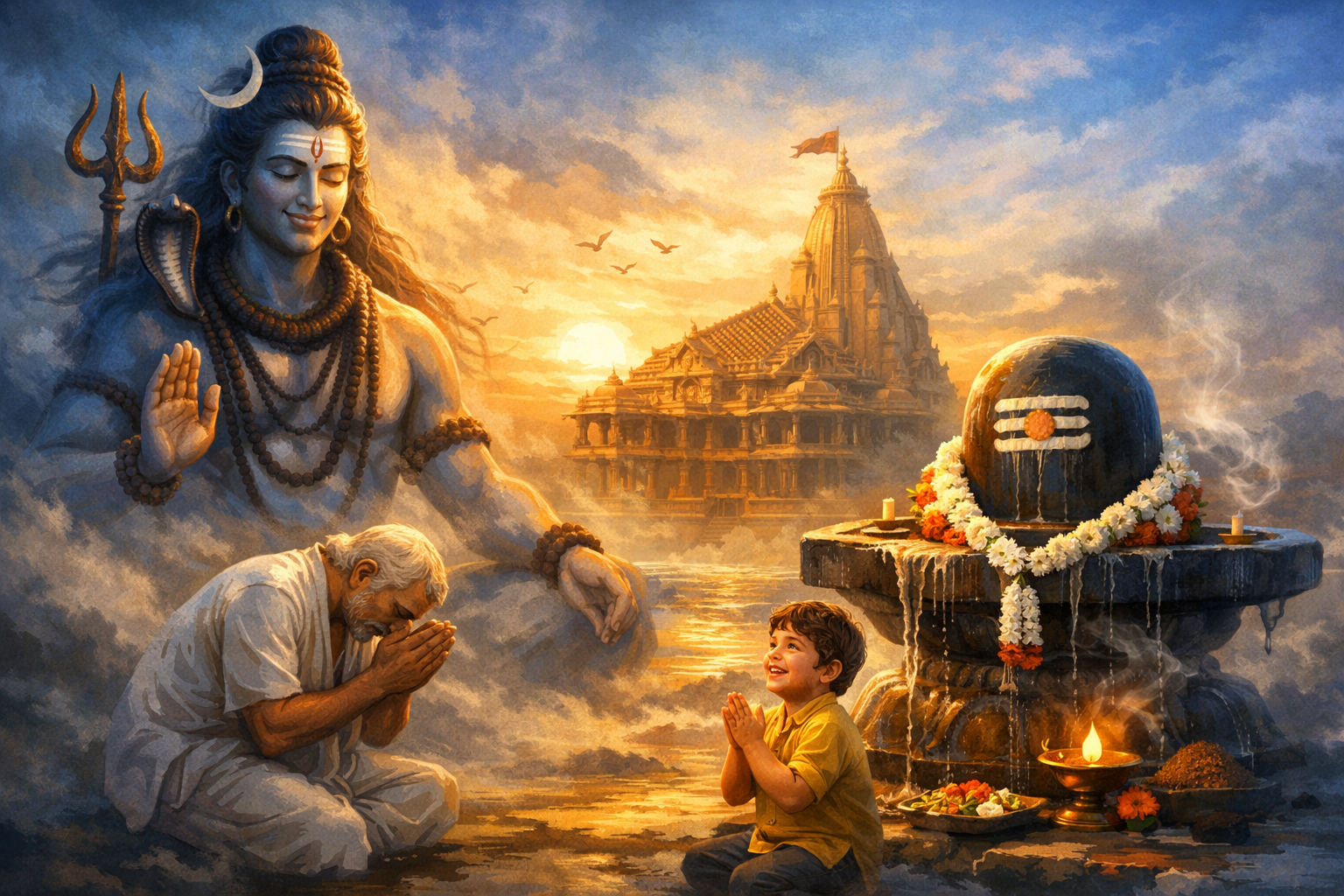
Bhalka Tirth stands timelessly as a bridge between the mortal and the divine. It reminds every visitor that while physical forms are transient, love, karma, and divine grace are eternal. A visit to this sacred sanctuary offers not just a glimpse into ancient mythology, but a quiet space for spiritual renewal and inner peace.
One thought on “1 Safe Hope Cures Sad Death Fear”