
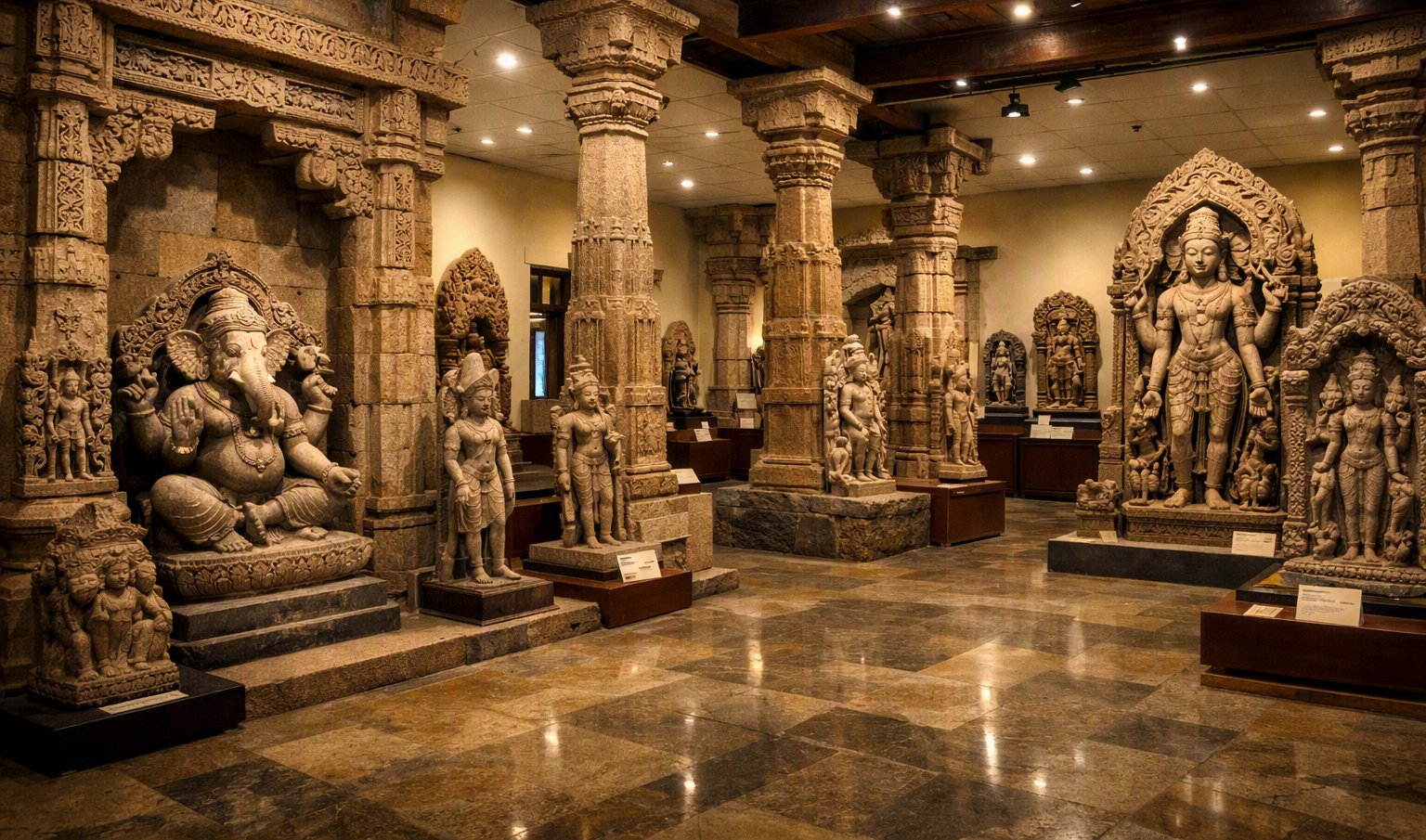
Prabhas Patan Museum: Prabhas Patan Museum houses rare stone carvings and inscriptions. Explore the artistic evolution and history of the Somnath region here.
Introduction to 1 Safe Store Saves Ruined History
Nestled in the historic town of Prabhas Patan in Gujarat, India, the Prabhas Patan Museum stands as a magnificent repository of art, archaeology, and centuries of resilient history. Often referred to as the Somnath Museum, this institution is dedicated to preserving the rich cultural, architectural, and spiritual legacy of the greater Somnath region. While Somnath is globally renowned for its legendary temple—a beacon of faith that has witnessed repeated cycles of destruction and reconstruction—the surrounding land holds a vast, subterranean archive of ancient artifacts. Acting as 1 Safe Store Saves Ruined History, the museum salvages these priceless fragments and presents a tangible chronicle of civilizations that flourished along the Arabian Sea coast over millennia.
Historical Significance of Prabhas Patan :1 Safe Store Saves Ruined History
To understand the collection housed within the museum, one must first appreciate the profound historical weight of Prabhas Patan itself. Located near Veraval in the Saurashtra region, Prabhas Patan is regarded as one of the most sacred pilgrimage sites in Hinduism. According to ancient Puranic texts, it is the site where Lord Krishna concluded his earthly avatar (Jaladhama).
Throughout antiquity and the medieval period, Prabhas Patan served as a bustling port city and a vibrant commercial and spiritual hub. Its strategic coastal location connected western India with maritime trade routes across the Arabian Sea, fostering cultural exchanges with the Middle East, Africa, and Southeast Asia. However, this prominence also made it a frequent target of invasions. Between the 11th and 18th centuries, the iconic Somnath Temple and its surrounding environs suffered multiple raids by foreign invaders seeking wealth and religious suppression. Each time the temple was destroyed, the local populace and regional rulers buried, fragmented, or re-used the sacred architectural remnants. The Prabhas Patan Museum was ultimately conceived to gather these scattered pieces, ensuring that the ruined history of the region was safely stored, studied, and appreciated by future generations.
Architectural Evolution and Stone Carvings
The core of the museum’s collection consists of architectural fragments recovered from the ancient ruins of successive Somnath temples and surrounding structures. These artifacts provide a masterclass in the evolution of Indian temple architecture, particularly the Maru-Gurjara (or Chalukyan) style that flourished in western India.
Intricate Reliefs and Sculptural Art :1 Safe Store Saves Ruined History
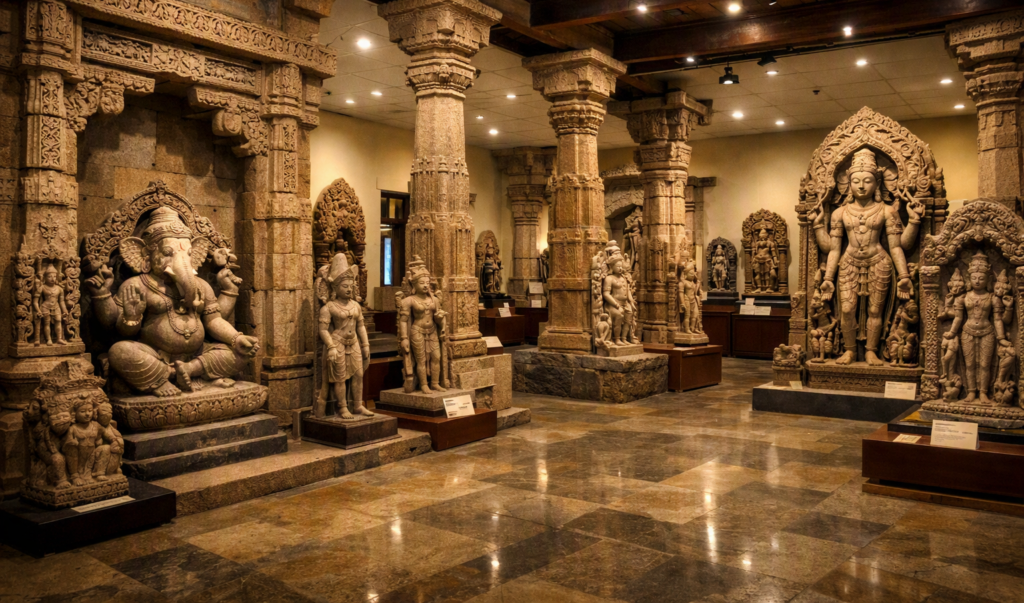
The museum houses an extensive array of stone carvings depicting deities, celestial beings (apsaras), musicians, dancers, and mythical creatures like makaras and vyalas. These sculptures showcase the high level of craftsmanship achieved by medieval artisans.
- Precision and Detail: The intricate ornamentation on temple pillars, doorjambs, and lintels reveals the meticulous care taken in chiseling local sandstone and hard stone.
- Iconographic Diversity: Alongside prominent Hindu deities such as Shiva, Vishnu, and Durga, the collection includes representations reflecting syncretic and regional religious traditions, illustrating how art evolved under various ruling dynasties, including the Maitrakas, Chalukyas (Solankis), and Vaghela rulers.
Evolution of Temple Design
Through broken pillar capitals, Amalakas (ribbed stone discs atop temple spires), and ceiling panels, visitors can trace how the architectural layout of Somnath grew from modest shrines into towering, complex monuments. The stone carvings demonstrate a shift from simpler structural forms in the early medieval period to exuberant, hyper-detailed sculptural programs during the Solanki golden age of Gujarat architecture.
Epigraphical Treasures: Inscriptions as Historical Records
In addition to sculptures, the Prabhas Patan Museum is an invaluable archive for epigraphists and historians due to its collection of stone inscriptions. Inscriptions serve as primary historical sources, offering authentic dates, names of kings, administrative structures, economic data, and grants made to the temple.
- Sanskrit and Prakrit Texts: Many inscriptions are written in classical Sanskrit or regional scripts, detailing donations of land, cattle, and gold by merchants, royals, and pilgrims.
- Maritime and Trade Insights: Some epigraphs shed light on the merchant guilds (shrenis) that financed temple maintenance and port activities, highlighting the deep integration of commerce and religion in ancient Prabhas Patan.
- Chronicles of Resilience: Certain inscriptions explicitly record the rebuilding efforts undertaken after past destructions, serving as stone-etched testaments to the unyielding spirit of the region’s people.
The Museum Experience: Preserving the Past for the Future :1 Safe Store Saves Ruined History
The Prabhas Patan Museum is more than just a warehouse of antiquity; it is a carefully curated educational space. By bringing together salvaged stones, broken idols, and weathered inscriptions, the museum achieves several vital objectives:
- Safeguarding Heritage: Protecting fragile artifacts from weathering, illegal antiquities trafficking, and further neglect.
- Educational Outreach: Offering students, historians, and tourists a comprehensive look into the artistic evolution of western India.
- Cultural Continuity: Bridging the gap between ancient traditions and modern identity, proving that while monuments can be temporarily ruined, the spirit and history of a civilization can be preserved through dedicated stewardship.
1 Safe Store Saves Ruined History: Conclusion :1 Safe Store Saves Ruined History
The Prabhas Patan Museum serves as a vital guardian of India’s architectural and spiritual heritage. By housing rare stone carvings and inscriptions, it transforms scattered fragments of destruction into a coherent narrative of artistic triumph and historical endurance. For anyone seeking to explore the deep layers of the Somnath region—moving beyond the reconstructed temple walls into the authentic, ancient soul of the land—this museum offers an unforgettable journey through time where 1 Safe Store Saves Ruined History
1 Safe Store Saves Ruined History

One thought on “1 Safe Store Saves Ruined History”