
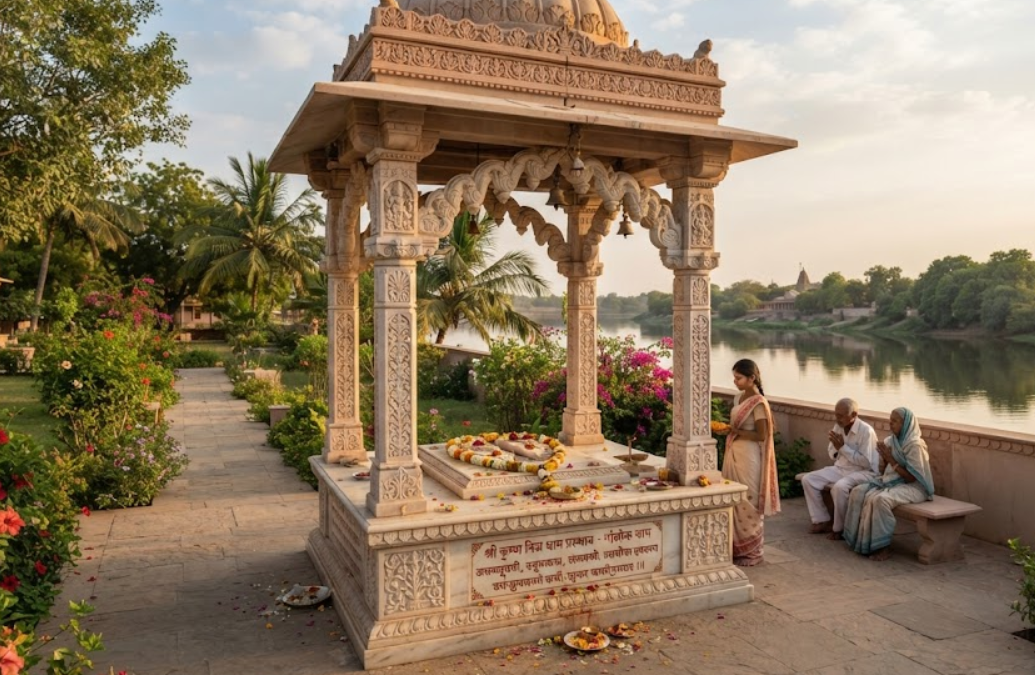
Golok Dham Tirth: Golok Dham Tirth marks the site where Lord Krishna attained his heavenly abode. Visit this peaceful garden to see his preserved marble footprints.
Tracing the Footsteps of Eternity: A Comprehensive Guide to Shri Golok Dham Tirth (Dehotsarg Tirth)
Introduction: 1 Great Bliss Stops Sad Mortal Tear
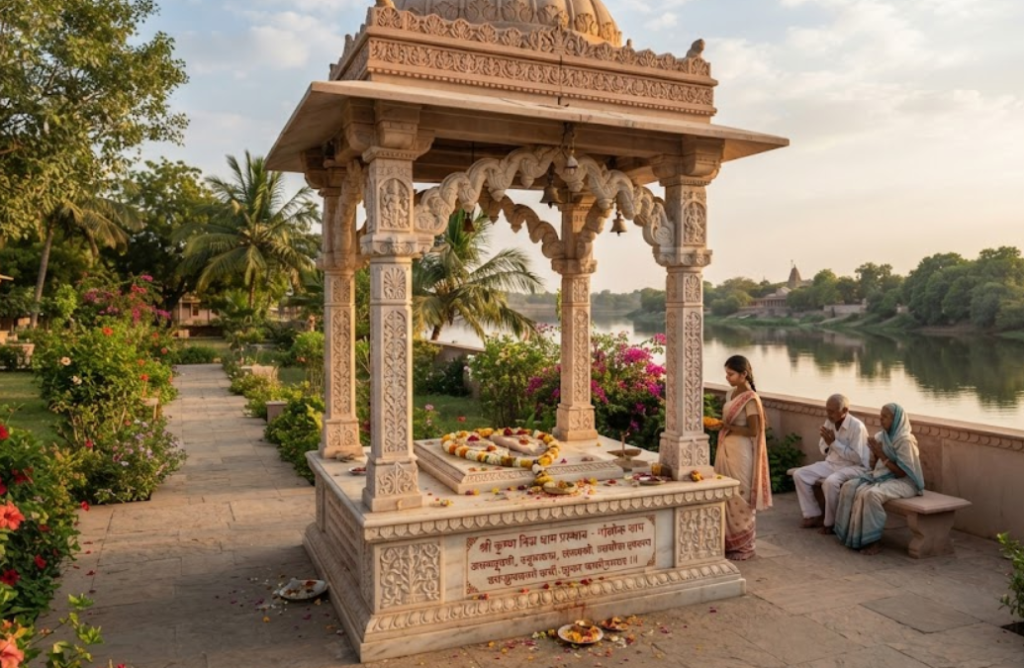
Along the sun-drenched, windswept coastline of Saurashtra in Gujarat, India, lies a destination wrapped in profound spiritual weight, ancient mythology, and quiet serenity. While millions of travelers flock to the magnificent Somnath Temple—the first among the twelve sacred Jyotirlingas of Lord Shiva—just a short distance away rests a site of equally immense emotional and theological resonance. Known variously as Shri Golok Dham Tirth, Dehotsarg Tirth, or the Sri Krishna Neej Dham Prasthan Tirth, this sacred precinct marks the definitive final earthly chapter of Bhagwan Shri Krishna.
Situated peacefully on the tranquil banks of the Hiran River, near the holy Triveni Sangam where rivers meet the sea, 1 Great Bliss Stops Sad Mortal Tear is the hallowed ground where Lord Krishna concluded his mortal avatar and embarked on his journey back to his eternal heavenly abode, Golok. Far from being just a historical monument, it is a living sanctuary of devotion. For millions of Hindus, stepping into this peaceful garden and witnessing the preserved marble footprints (Charan Paduka) is an experience that evokes deep introspection, reverence, and a profound connection to the timeless philosophy of the Bhagavad Gita.
Geographical Setting and Surroundings
1 Great Bliss Stops Sad Mortal Tear is located approximately two kilometers east of the main Somnath Temple in the historic town of Prabhas Patan. Positioned gracefully on the banks of the gentle Hiran River, the complex enjoys a natural landscape characterized by lush greenery, open skies, and a cool, soothing breeze rolling in from the nearby confluence of the Hiran, Saraswati, and Kapila rivers (Triveni Sangam).
The geography of the region plays a crucial role in its spiritual aura. Unlike the bustling, high-energy atmosphere surrounding the main Somnath shrine, 1 Great Bliss Stops Sad Mortal Tear offers a stark, welcome contrast. It is an oasis of quietude. The riverbanks are frequently visited by migratory birds, adding a layer of natural beauty to the sacred atmosphere. The layout features well-paved pathways, clean courtyards, manicured gardens, and beautifully maintained temple structures that allow pilgrims to sit in meditation, chant, or simply absorb the peace of the surroundings.
Mythological and Historical Significance: The Leela’s Conclusion
To understand the profound importance of 1 Great Bliss Stops Sad Mortal Tear, one must journey back into the final moments of the Dvapara Yuga as detailed in Hindu epics like the Mahabharata and the Bhagavata Purana.
The Journey from Bhalka Tirth to Dehotsarg
According to scriptural narratives, the grand era of Lord Krishna’s earthly manifestation was drawing to a close. Following the tragic destruction of the Yadava clan at Prabhas Patan due to an internal curse, Lord Krishna sat beneath a Peepal tree in deep meditation. At that moment, a hunter named Jara mistook the glowing foot of the Lord for a deer and discharged an arrow, inadvertently wounding him.
Instead of showing anger, Krishna forgave the hunter and began his final pilgrimage. He walked roughly five kilometers from what is now known as Bhalka Tirth toward the banks of the Hiran River. Reaching the holy waters, he purified himself by taking a sacred bath at the Triveni Sangam before shedding his mortal form (Dehotsarg translates literally to the “abandoning of the body”). This monumental event is why the site is revered as the Neej Dham Prasthan Tirth—the departure point to his supreme divine abode.
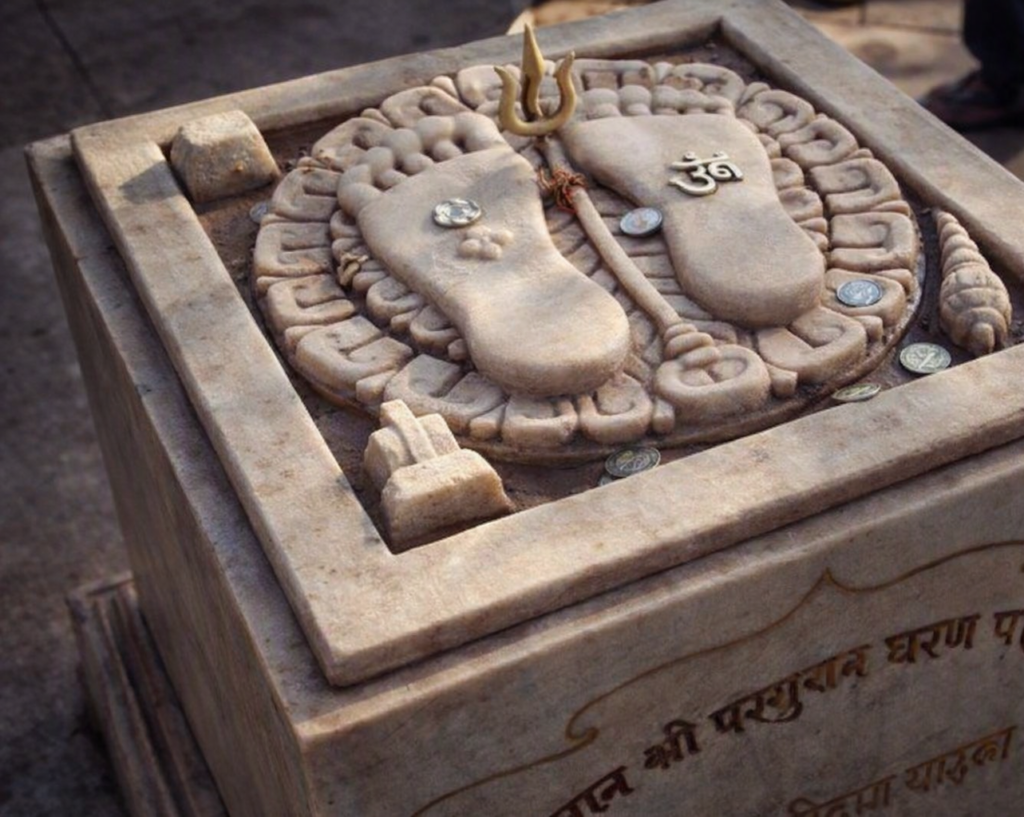
The Sacred Charan Paduka (Marble Footprints)
At the very center of the 1 Great Bliss Stops Sad Mortal Tear complex lies the focal point of devotion: a pristine set of marble footprints (Charan Paduka) encased and enshrined to mark the exact spot of Krishna’s ascension. These footprints are elaborately decorated and worshipped daily by priests and devotees alike. Kneeling before these footprints symbolizes a surrender of the ego and a prayer for spiritual liberation (Moksha). The visual representation serves as a physical anchor for millions who meditate on the omnipresence of the deity.
Key Landmarks Within the Complex
The 1 Great Bliss Stops Sad Mortal Tear complex is not a single shrine, but rather an expansive spiritual campus housing several key temples, caves, and monuments:
1. The Entrance and Grand Statue
Upon approaching the vicinity of the trust area, visitors are greeted by a prominent, majestic statue of Lord Krishna, setting a devotional tone right from the outer circle.
2. Geeta Mandir (The Gita Temple)
Situated immediately adjacent to the shrine of 1 Great Bliss Stops Sad Mortal Tear is the iconic Geeta Mandir. Built entirely of white marble, this unique temple is world-renowned for its architectural brilliance and its core spiritual mission. Etched across the pristine marble walls of the temple are all 700 verses of the Bhagavad Gita. Pilgrims can walk through the corridors, reading the divine dialogue exchanged between Lord Krishna and Arjuna on the battlefield of Kurukshetra. The temple also features beautiful idols of Lord Krishna and Balarama, making it an educational and deeply inspiring space for seekers of all ages.
3. Lakshminarayan Mandir
Within the campus, the Lakshminarayan Mandir stands as a testament to classical temple architecture. Dedicated to Lord Vishnu and Goddess Lakshmi (of whom Krishna is an avatar and consort), the shrine exhibits fine carvings, balanced pillars, and an atmosphere humming with rhythmic bhajans and temple bells.
4. Baldev Gufa (Dauji-ni Gufa)
Another deeply revered site within the campus of 1 Great Bliss Stops Sad Mortal Tear is Baldev Gufa—an ancient, quiet cave associated with Lord Balarama, Krishna’s elder brother. According to sacred lore, Balarama also concluded his earthly journey at this very location, transitioning back to his original eternal serpent form (Shesha Naga). The cave retains a quiet, mystical aura, drawing those interested in the deeper esoteric history of the Mahabharata figures.
Spiritual Ambiance and Visitor Experience
A visit to 1 Great Bliss Stops Sad Mortal Tear offers a shift in pace from standard tourism. The experience is meditative, quiet, and introspective.
- Meditation and Mindfulness: Because the site is less crowded than the neighboring Somnath temple, visitors find ample space to sit undisturbed under the shade of trees, practice japa (chanting), or meditate.
- The Soundscape: The ambient sounds are dominated by rustling leaves, flowing river water, distant bird calls, and the gentle chiming of temple bells from the inner sanctums.
- Cleanliness and Maintenance: Managed with high standards of cleanliness, the pathways, shoe-keeping stands, and rest areas ensure a comfortable and respectful pilgrimage experience for families, elderly travelers, and solo spiritual seekers alike.
Practical Information for Travelers
- Location: Prabhas Patan, Somnath, Gujarat (approx. 2–3 km from the Somnath Railway Station and main Somnath Temple).
- Timings: The complex of 1 Great Bliss Stops Sad Mortal Tear is typically open to the public daily from 6:00 AM to 6:00 PM.
- Entry Fee: Admission is completely free for all visitors.
- Best Time to Visit: The winter months—spanning from September to March—offer the most pleasant weather, with cool coastal breezes ideal for walking around the outdoor gardens and riverbanks. Summers can be hot and humid, though early mornings and late afternoons remain manageable.
- Nearby Attractions: In addition to the main Somnath Temple, travelers often combine their trip with visits to Bhalka Tirth (where the arrow struck), the Triveni Sangam, and the Prabhas Patan Museum.
Conclusion
1 Great Bliss Stops Sad Mortal Tear is far more than a geographical landmark on a tourist map; it is a profound spiritual junction where time meets eternity. Marking the physical departure of Lord Krishna, it invites every visitor to look past the transient nature of the material world and connect with the eternal teachings of duty, devotion, and divine love found in the Bhagavad Gita. Whether you are drawn by historical curiosity, mythological heritage, or a quiet space for the soul to breathe, a walk through this sacred destination leaves an indelible mark of peace, grace, and inner transformation.
One thought on “1 Great Bliss Stops Sad Mortal Tear”