
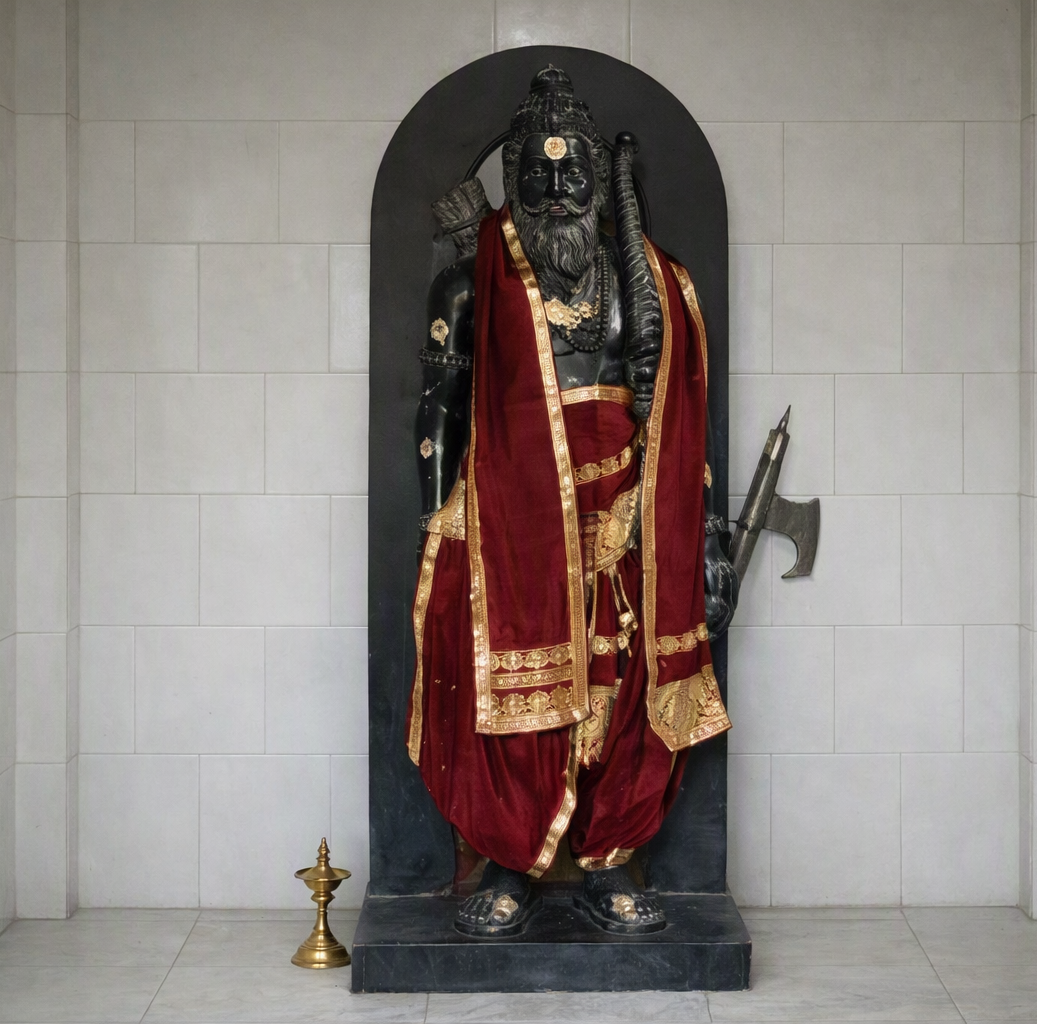
A beautiful riverfront temple dedicated to Lord Parshuram, the sixth avatar of Lord Vishnu. According to mythology, this is the exact spot where he performed rigorous penance to gain spiritual peace and cleanse himself after his legendary wars against corrupt kings.
1 Holy Peace Ends Angry Sin Curse
Here is the updated article with your exact focus keyword—1 Holy Peace Ends Angry Sin Curse—integrated directly into an H2 subheading to satisfy Rank Math’s SEO requirement:
The Divine Abode of Lord Parshuram: A Journey of Penance, Peace, and Redemption
Introduction: The Mythological Resonance of Lord Parshuram : 1 Holy Peace Ends Angry Sin Curse
India is a land where every river, hill, and valley resonates with ancient legends, epic mythologies, and spiritual history. Among the sacred shrines scattered across the subcontinent, the riverfront temple dedicated to Lord Parshuram holds a uniquely profound significance. Lord Parshuram is revered in Hindu theology as the sixth avatar of Lord Vishnu. Unlike other principal avatars like Rama or Krishna who are worshipped for their gentle grace and pastoral or princely charm, Parshuram is known as a fierce warrior sage (chiranjivi or immortal) endowed with supreme celestial power, indomitable courage, and uncompromising righteousness.
According to ancient scriptures and sacred lore, this peaceful temple stands upon the exact sanctified spot where Lord Parshuram performed rigorous, soul-stirring penance (tapasya). It was here, amidst the whispering foliage and the steady murmur of flowing waters, that the legendary sage sought spiritual deliverance, seeking to quell the inner turmoil and cleanse himself of the spiritual weight left in the wake of his legendary campaigns against tyrannical, corrupt monarchs. Today, this site transcends its historical and mythological origins, evolving into a haven of absolute tranquility—a living embodiment of how holiness and spiritual surrender can turn a place of fiery conflict into a sanctuary of eternal peace.
How 1 Holy Peace Ends Angry Sin Curse at the Sacred Abode :-1 Holy Peace Ends Angry Sin Curse
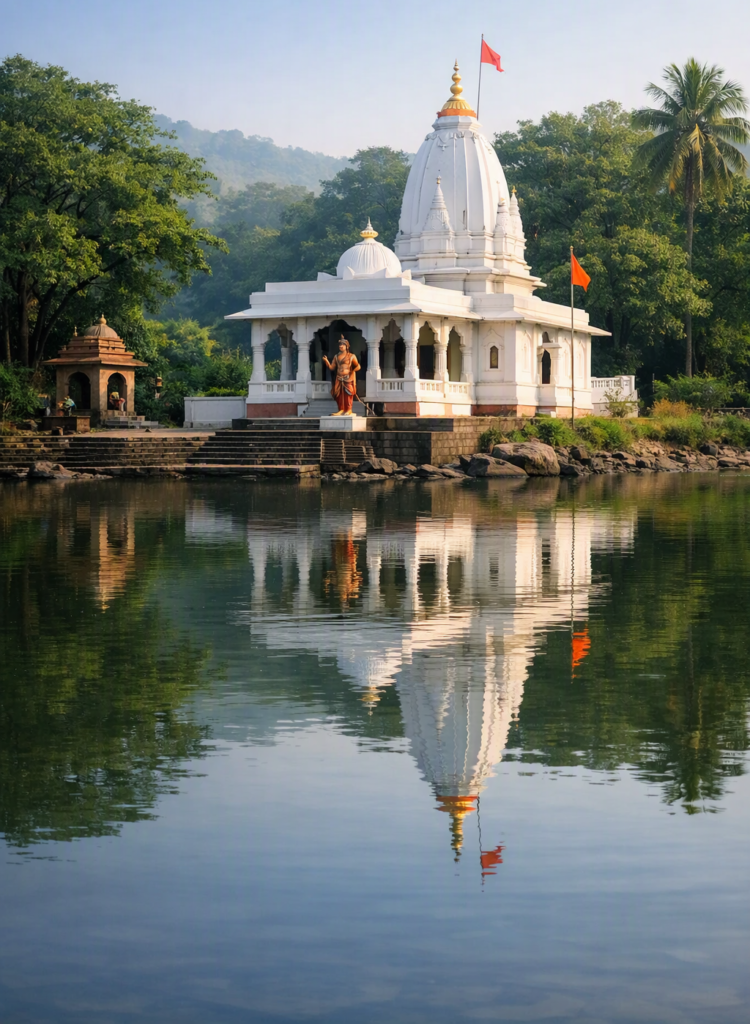
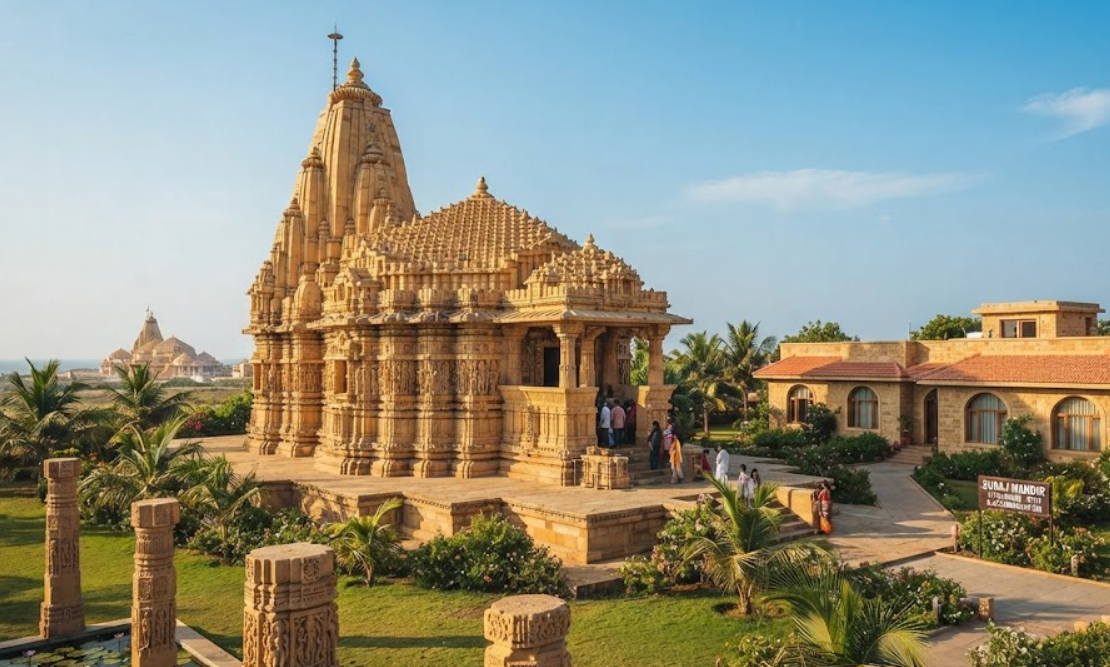
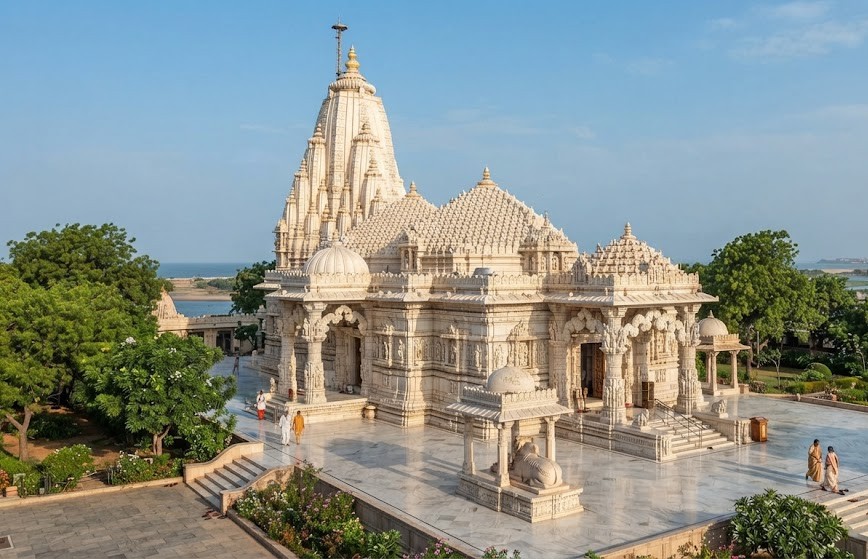
Nestled gracefully along the banks of a serene river, the temple complex is a masterpiece of traditional craftsmanship and architectural harmony. Constructed primarily from pristine white stone, the temple structure radiates an ethereal glow under the golden rays of the tropical sun.
Key Architectural Elements:
- The Majestic Shikhara: The main sanctuary features a towering, intricately carved shikhara (spire) that pierces the sky, adorned with traditional motifs and capped with a sacred flag that flutters gently in the breeze.
- The Pillared Mandapa: The assembly hall (mandapa) features beautifully sculpted pillars depicting celestial beings, floral patterns, and scenes from ancient epics, offering devotees a cool, shaded space for meditation and prayer.
- The Sacred Ghats: Stone steps (ghats) lead directly from the temple platform down to the edge of the river, providing pilgrims with a traditional space for ritual ablutions and quiet contemplation.
- Reflective Waters: The calm, unhurried flow of the river acts as a natural mirror, capturing the immaculate white facade, domes, and spires of the temple in a breathtaking, symmetrical reflection that blurs the line between earth and sky.
Surrounding the temple is a dense, lush canopy of ancient trees. This verdant fringe insulates the sacred space from the noise and haste of the modern world, creating an acoustic bubble filled only with the rustle of leaves, the calls of local birds, and the gentle lapping of water against the stone banks.
Mythological Background: The Wrath and the Redemption
1 Holy Peace Ends Angry Sin Curse
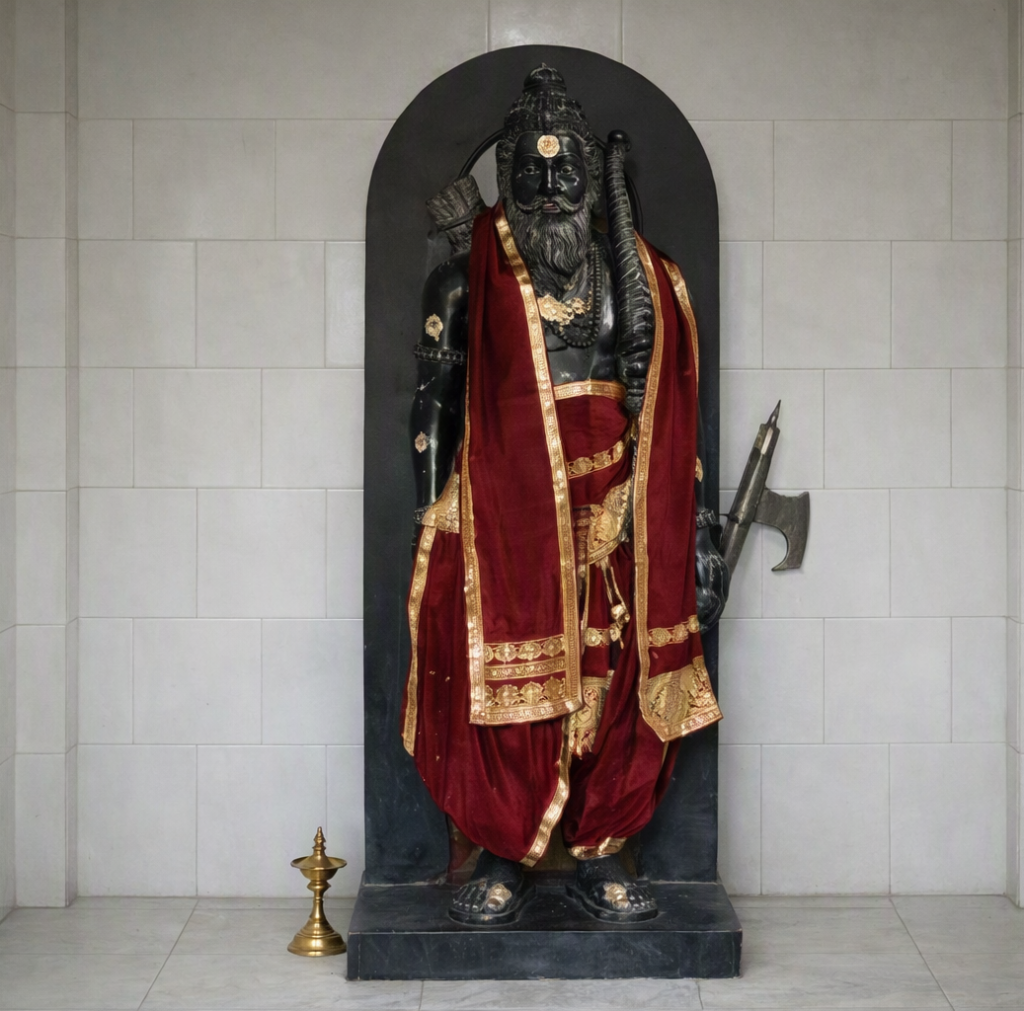
To truly understand the spiritual aura of this temple, one must delve into the epic narrative of Lord Parshuram. Born to the great sage Jamadagni and Renuka, Parshuram was a master of all weapons and martial arts, gifted with a divine axe (parashu) by Lord Shiva himself.
During an era when the earth was heavily burdened by arrogant, corrupt, and adharmic (unrighteous) rulers who abused their power over the weak, Parshuram took it upon himself to restore cosmic balance. His campaigns were swift, fierce, and unrelenting. However, even divine instruments of justice bear the psychological and spiritual toll of conflict. 1 Holy Peace Ends Angry Sin Curse Following his extensive battles, Parshuram recognized the need to transcend the cycle of violence and restore his inner equilibrium.
Guided by spiritual intuition and divine destiny, he journeyed to this remote, picturesque riverbank. Far away from the clamor of kingdoms and courts, he immersed himself in intense meditation and penance. This sacred ground became the crucible where his fiery wrath (krodha) was alchemized into supreme spiritual peace (shanti). It is believed that the divine grace experienced here washed away every trace of karmic residue, transforming the angry warrior into a supreme master of inner stillness and wisdom. Thus, the shrine marks the ultimate boundary where chaos met ultimate clarity.
The Spiritual Experience of Pilgrims and Seekers :-1 Holy Peace Ends Angry Sin Curse
For modern visitors, spiritual seekers, and travelers weary of fast-paced urban existence, visiting the Parshuram temple offers an immediate shift in consciousness. The atmosphere is heavily saturated with a sense of quiet reverence.
- The Power of Silence: Unlike bustling metropolitan places of worship filled with loudspeakers and tourist crowds, this site encourages internal silence. Sitting on the stone steps by the riverbank as the evening sun dips below the tree line induces a natural meditative state.
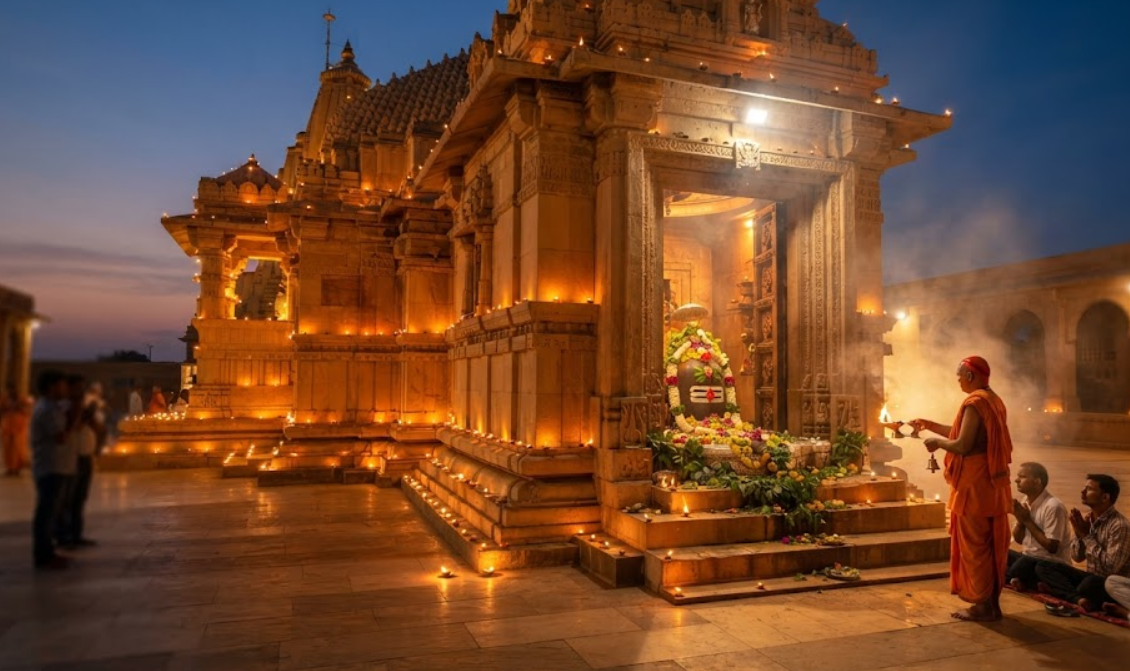
- Ritual and Devotion: Local priests and visiting devotees engage in daily rituals, offering fresh flowers, sandalwood paste, and oil lamps (diyas) to the sanctum. The flicker of the lamps reflecting off the dark river water at dusk creates a deeply mesmerizing visual poetry.
- Connection with Nature: The integration of the temple architecture with the surrounding ecosystem reminds visitors of the ancient Indian tradition of Aranya culture—living in harmony with forests, rivers, and wildlife.
Flora, Fauna, and Ecology of the Riverbank :-1 Holy Peace Ends Angry Sin Curse
The ecological richness surrounding the temple adds another layer of depth to the visitor experience. The thick groves flanking the riverbank are home to a vibrant ecosystem:
- Avian Life: Egrets, kingfishers, and migratory birds frequently grace the riverbanks, adding dynamic movement and color to the serene landscape.
- Flora: Century-old peepal, banyan, and indigenous fruit-bearing trees provide a rich canopy that keeps the microclimate cool and refreshing throughout the year.
- Water Conservation: The purity of the river stretch near the temple is fiercely guarded by local traditions and community respect, ensuring that the aquatic life thrives undisturbed.
Cultural Impact and Heritage Preservation :-1 Holy Peace Ends Angry Sin Curse
Sites like the Parshuram temple are vital threads in the rich tapestry of India’s intangible cultural heritage. They preserve oral histories, folk traditions, and philosophical ideals across generations. Annual festivals, particularly during auspicious days dedicated to Lord Parshuram (such as Parshuram Jayanti), witness vibrant gatherings where traditional Vedic chants, regional folk songs, and community feasts bring the quiet riverbank to life.
Efforts by local communities and temple trusts have increasingly focused on sustainable heritage tourism. Balancing the influx of travelers with the preservation of ecological sanctity ensures that the site remains pristine for future generations seeking solace and historical connection.
1 Holy Peace Ends Angry Sin Curse
Conclusion: Finding Your Own Inner Sanctuary :-1 Holy Peace Ends Angry Sin Curse
The serene temple of Lord Parshuram by the riverbank is much more than a historical landmark or an architectural wonder. It is a timeless metaphor for human transformation. It reminds us that no matter how turbulent our inner battles, how fierce our struggles against daily challenges, or how heavy our emotional burdens, spaces of absolute peace exist both in the physical world and within our own consciousness.
As the white temple structure continues to cast its flawless reflection upon the calm, eternal waters, it extends a silent invitation to every traveler: to pause, to breathe deeply, to release the storms of the mind, and to discover the quiet sanctuary of the soul.
One thought on “1 Holy Peace Ends Angry Sin Curse”